Most idea-stage content online tells people to do the same things:
- “find a problem”
- “research competitors”
- “talk to customers”
That’s fine but it misses the most important 2026 truth:
Many ideas don’t fail because there’s no demand.
They fail because the idea becomes unfundable, untrusted, or too expensive to deliver.
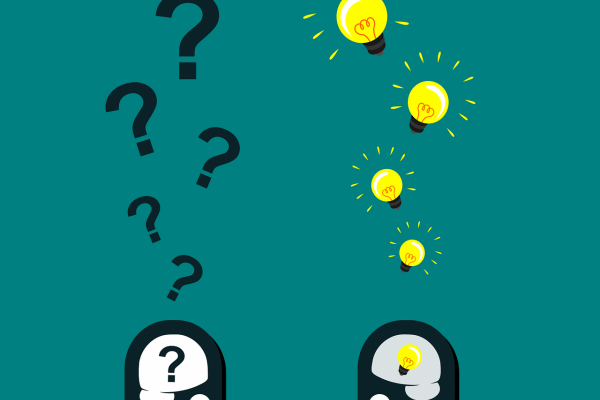
So instead of asking, “Is this a good idea?” the better question in 2026 is:
“Where will this idea break when reality hits?”
That’s what a pre-mortem does.
A pre-mortem is a structured way to imagine the business failed 6 months from now, then identify why before you spend money.
It’s not negative. It’s protective. And it produces unusually clear ideas.
The 4 failure forces most founders ignore
A business idea is not just a product. It’s a system.
In 2026, ideas most often collapse under one of these forces:
- Distribution failure (can’t reach buyers consistently)
- Trust failure (buyers hesitate because risk feels high)
- Unit economics failure (revenue comes in, but profit is weak)
- Delivery failure (too complex, too custom, too slow to fulfill)
Most “idea validation” content focuses on demand and competition.
This guide helps you validate the full system.
The Pre-Mortem Stress Test
Imagine it’s six months from today. The business idea didn’t work.
Write one sentence:
“This idea failed because…”
Now test it through five lenses that matter in 2026.
1) The “Buyer Switch” lens: why would they change from what they do now?
This is the #1 insight most founders miss.
Your competitor isn’t always another company. Often it’s:
- their current workaround
- doing nothing
- a cheaper alternative
- a friend/relative
- a free tool
- an AI tool
Stress-test question:
What would make a buyer switch from their current solution this month?
If the answer is vague (“because it’s better”), the idea is fragile.
A stronger answer sounds like:
- “This saves time weekly.”
- “This avoids a painful mistake.”
- “This reduces stress immediately.”
- “This gives a clear result fast.”
2) The “Trust Tax” lens: what makes this feel risky to buy?
In 2026, buyers are cautious and scam-aware.
Most ideas die because the buyer silently thinks:
- “What if it doesn’t work?”
- “Will I be disappointed?”
- “What if I’m wasting money?”
- “What if this is low quality?”
Stress-test question:
What are the top 3 fears a buyer has before purchasing?
Then ask a follow-up:
Can those fears be reduced without lowering the price?
Better trust reducers than discounts:
- proof examples
- clear “how it works”
- clear boundaries
- clear timeline
- a small starter version
- a fair guarantee (not necessarily a full refund)
If you can’t reduce perceived risk, you’ll fight discount pressure forever.
3) The “Profit Reality” lens: will this idea pay after the hidden costs?
Founders often price the visible work and ignore the invisible work.
Invisible work includes:
- messages and follow-ups
- revisions and rework
- customer support
- delivery complications
- returns/refunds
- payment chasing
- tool subscriptions
- context switching
Stress-test question:
If this sells well, what invisible work grows with it?
If the invisible work grows faster than revenue, the idea scales into burnout.
A stronger idea has one of these:
- repeatable delivery
- boundaries that prevent scope creep
- a clear price for “extra complexity”
- a path to repeat customers (so acquisition costs don’t crush profit)
4) The “Distribution Proof” lens: can you reach buyers predictably without luck?
Instead of asking “How will I market?” ask:
Where will the first 20 buyers come from—specifically?
Distribution is strongest when it fits one of these:
- people already searching for the solution (SEO intent)
- communities you already have access to
- partnerships where someone already has trust
- outbound where targeting is clear
If distribution depends on:
- “I’ll go viral”
- “I’ll run ads and see”
- “I’ll post consistently and hope”
…it’s not a plan. It’s a prayer.
5) The “Copycat Test” lens: what stops someone from cloning you?
In 2026, copying is fast.
So differentiation isn’t “branding.” It’s one of these:
- speed (delivery system)
- niche focus (you win a specific segment)
- process (how you deliver is the advantage)
- proof (results and credibility)
- convenience (done-for-you with fewer steps)
Stress-test question:
If someone copied your idea tomorrow, why would buyers still choose you?
If you can’t answer, you’ll compete on price.
The “Survival Upgrade”: turn weaknesses into design choices
This is the outside-the-box part: the pre-mortem isn’t just diagnosis. It creates strategy.
Here’s how to convert the most common failures into stronger designs:
If distribution is weak: build a “distribution-first” version
Start with:
- partnerships
- a niche community
- SEO pages that match buyer questions
instead of building a full catalog.
If trust is weak: sell a “starter” offer first
Make the first purchase smaller, safer, and faster.
If profit is weak: charge for complexity or reduce complexity
Introduce tiers:
- Standard
- Priority
- Concierge (for high-touch customers)
If delivery is fragile: productize the process
Define “done” and stop selling unlimited flexibility by accident.
This is how ideas become viable.
The 2026 “Green Flag” score
A concept is strong if it has at least 3 of these:
✅ People already spend money solving it
✅ Switching is easy (clear reason to move now)
✅ Trust can be built quickly (proof and clarity)
✅ Profit survives hidden costs
✅ Distribution is reachable without luck
✅ Differentiation is clear in one sentence
If you can’t hit at least 3, the idea may still work but it needs redesign before you invest.
Closing
Most people validate ideas by asking, “Do you like this?”
The better question in 2026 is:
“Where will this break, and how do we redesign it before it breaks?”
That’s how founders avoid wasted months and choose ideas that can actually win.